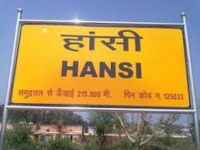
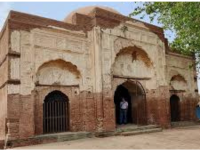
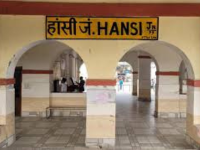
Hansi – A Historic City with Growing Local Businesses
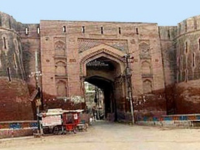
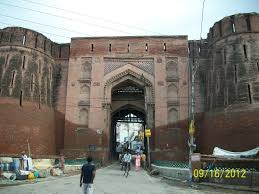
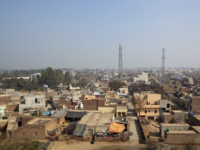
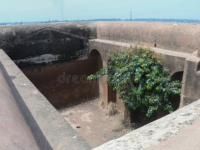
Hansi, an ancient town in Haryana's Hisar District, boasts a rich history as a powerful fort and strategic stronghold, known as Asigarh, famous for its sword-making under Prithviraj Chauhan and later a centre for George Thomas's kingdom, with roots tracing back to Kushan times and significant to the Delhi Sultanate, ultimately becoming a British administrative hub, retaining its historical significance with remnants like Asigarh Fort and ancient gates.
History
Dr. Bhup Singh, historian, has written Hansi ka Etias (lit. History of Hansi), a book published by Rotary International.
Early and classic period
Hansi hoard, a large hoard of Jaina bronzes was accidentally discovered at Hansi in February 1982. These include idols that may belong to the Gupta period (319 to 605 CE), while most belonged to the 7th–8th centuries. They were apparently buried underground before the impending attack by Mahmud of Ghazni's son Mas'ud I of Ghazni in 1037 CE. Masud attacked swordsmen of Hansi and took women into slavery who were later sold at Gazni.
Medieval period
10-12th century: Tomara-Chauhan Rajpur period
It is believed that Hansi was founded by King Anangpal Vihangpal Tomar for his guru "Hansakar"
(957AD). Later, the son of King Anangpal Tomar, Drupad established a sword manufacturing factory
in
this
fort, hence it is also called "Asigarh". Swords from this fort were exported as far away as to
Arab
countries. As per Talif-e-Tajkara-e-Hansi by Qazi Sharif Husain in 1915, around 80 forts across
the
area were controlled from this centre "Asigarh".
A few also say that it was founded by ill daughter Hansivati/Ambavati of Prithvi Raj Chauhan
though
there exists no proof of Prithiviraj's daughter by that name.
13th-15th century: Sultanate period
In 1192, Mohammed Ghori defeated Prithvi Raj Chauhan in the Second Battle of Tarain, in the same year Battle of Bagar took place to occupy Hansi, Jatwan besieged the Muslim commander Nasrat Uddin at Hansi in 1192 CE, shortly after the defeat of Prithviraj. On receiving this news Qutb-ud-din marched twelve farsakhs, i.e., about 40 miles during one night. Jatwan raised the siege of Hansi and prepared for an obstinate conflict. "The armies attacked each other" says the author of Taj-ul-Maasir "like two hills of steel, and the field of battle (on the borders of the Bager country) became tulip-dyed with the blood of warriors. Jatwan had his standards of God-plurality and ensigns of perdition lowered by the hand of power". Hindu rule ended in Hansi. This was the time when non-Muslims were not permitted to settle here. Slowly, Hansi lost its importance and was remembered only as a fort. Delhi started becoming the center of attention.
16th century onwards: Modern period , 16th-17th century: Mughal period
Hansi is listed in the Ain-i-Akbari as a pargana under Hisar sarkar, producing a revenue of 5,434,438 dams for the imperial treasury and supplying a force of 7000 infantry and 500 cavalry. It had a brick fort at the time. Shahjahan came to Hansi, met the famous Hindu saint Jagannath Puri Samadha Hansi and after his approval Hindus were allowed to settle in Hansi. In addition to the Hindus, Hansi had Muslims and a few Jains that inhabited Hansi during this Mughal rule. Jagannath Puri Samadha has also many devotees because of their belief that Jagannath Puri was not a common human being but a supreme being. There are many famous stories of Jagannath Puri like a walkable wall, sweat lotus, and so on.
18th century: Sikh and Maratha rule
The Marathas captured Hansi area in 1778. They tried to establish a state for some time in this area until Hansi fell to the Sikh Empire and got absorbed into Jind State.
19-20th century: British colonial rule
The area came under British rule after 1803 till 1947. After the Indian Rebellion of 1857, the British Empire crushed over 100 people from Rohnat, Mangali, Hazampur, Jamalpur, Bhatla and other villages under a road roller on the road as punishment for participating in the mutiny. That road is now known as Lal Sadak (literally Red Road or Blood Road) where a monument, on approach road from Hansi to Rohnat Lal Sadak, to the martyrs has been constructed after the independence. Guru Gobind Singh also came to Hansi in 1705 and inspired the public to revolt against Mughal rule. In 1707, Baba Banda Singh Bahadur attacked Hansi. Hansi was under Maratha rule in 1736 and, after Third Battle of Panipat in 1761, was lost to Ahmed Shah Abdali. Maharaja Jassa Singh Ramgarhia in 1780s also took this area under his control for some years and then left. George Thomas, an Irish mercenary and raider who rose from an ordinary sailor to become a feudal lord (jagirdar), made Hansi as his capital. Hansi was seized by the British East India Company rule in 1802. From 1819–32, Hansi was a District HQ which was later shifted to Hisar in 1832. Hansi was also the headquarters of Colonel James Skinner CB (1778 – 4 December 1841) the Anglo-Indian immigrant and mercenary in India, who became known as Sikandar Sahib. 1st Skinner's Horse and 3rd Skinner's Horse (formerly 2nd Skinner's Horse) were founded by Colonel James Skinner at Hansi in 1803. These units are still part of the Indian Army. He also built the Sheikhpura Kothi, on Hansi-Ugalan road off NH9 Hansi bypass, named after his son. Raham Ali ibn Mohammad Hussain ibn Maulana Abul Khair of Palwal was killed along with Aulia Khan Balooch at Pargana Hansi. Raham Ali was brother-in-law of Qazi Syed Mohammad Rafi. After the Anglo-Maratha Wars, Hansi came under British rule. Hansi took active part in the 1857 war of liberation (Gadar), Lala Hukam Chand Jain was martyred in 1857 by Britishers.
1947 onwards: Post-independence
In 1947 when British India was divided into Pakistan and India, a large number of Muslims
including
Syeds and Ranghars migrated to Pakistan from Hansi city and their villages (such as Baliali and
Khanak). Pakistani cricket player Inzamam-ul-Haq's parents migrated to Pakistan from Hansi after
partition.
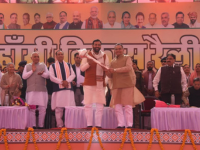
A proposal to carve out the new Hansi district out of the existing Hisar district had been
pending
since 2016. On the 16th of December, 2025, present Chief Minister Nayab Singh Saini
announced in
a public rally that Hansi would become the 23rd district of the Haryana state. The official
gazette notification "682-ARIC-03-2025/7392" was released on the 19th of December, making
Hansi
the 23rd district of the Haryana state. The new district would comprise of Hansi-1, Hansi-2 and
Narnaund sub-divisions with a total of 110 villages shared amongst them, including villages such
as
Lohari-Ragho, Rakhi Khas and the village where the oldest civilatisation markers have been
found,
Rakhigarhi.